
Housing Collapse. It’s a Reset, and That’s Where Smart Housing Wins.
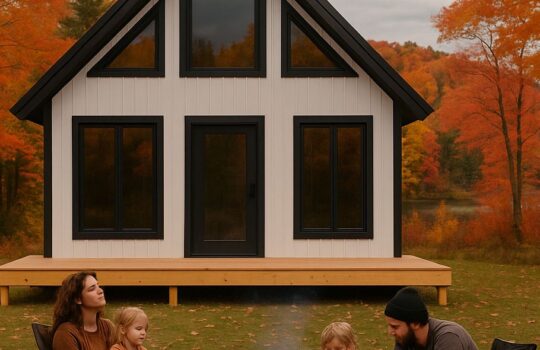
The American housing market feels calmer heading into 2026. That calm can be good news. Buyers are no longer forced to sprint. Instead, many can compare options and make decisions with less pressure. In that environment, affordable SIP home kits are gaining attention for reducing risk while still delivering real home comfort.
Back in 2021 and 2022, scarcity turned every listing into a contest. People moved fast, often too fast. As a result, they accepted uncertainty that they did not fully price in. Today, the market is shifting away from adrenaline. It is shifting toward math, planning, and outcomes you can control.
That change is the practical story of 2026. The question is no longer, “How fast can I win?” The better question is, “What can I build or buy that still feels like a win five years from now?” For households, employers, investors, and small developers, that question matters more than headlines. It also points to projects that are easier to execute and own.
Why 2026 Favors Affordable SIP Home Kits and Better Planning
The market has softened. Existing-home sales fell 8.4% in January 2026. That is a real decline in activity. However, the larger signal is more useful: conditions are loosening in ways that help buyers. Mortgage rates are down from last year. Inventory is improving in many areas. Forecasts also describe 2026 as a year of gradual recovery rather than dramatic decline.
That is why the best news right now is “boring news.” Boring news means fewer surprises. It also means fewer forced decisions.
Lower Mortgage Rates Help Buyers Regain Options
Freddie Mac reported the average 30-year fixed mortgage rate at 6.01% in February. That is the lowest level since September 2022. The rate is not “cheap,” but the direction helps. Even a small shift changes monthly payments. As a result, more buyers can qualify or stay within budget.
Meanwhile, a calmer market helps buyers evaluate tradeoffs. They can compare neighborhoods. They can also compare build paths. For many people, that is the first time in years the process has felt rational.
Inventory Is Improving, Which Restores Choice
Inventory has also moved in the right direction. Realtor.com’s January 2026 data shows housing inventory up 10% year over year. It also notes that buyer activity and new listings improved as mortgage rates eased. The market is not fully back to pre-pandemic “normal.” Even so, it is closer than it was.
Choice changes how people behave. It changes negotiations. It changes inspections and due diligence. It also changes the timeline people feel forced to accept. In short, it gives buyers back control.
The Real Pain Point: The Traditional Build Path Can Be Fragile
The market cycle is only part of the story. The deeper issue is how fragile many builds become when the scope is vague. That fragility shows up in a few familiar ways. Schedules slip. Carry costs rise. Subcontractors become hard to line up. Materials are delayed. Then change orders multiply because the original plan was not controlled.
NAHB’s Housing Market Index registered 36 in February 2026. Builder confidence is still subdued. Affordability challenges and elevated costs remain real constraints. Therefore, projects that rely on perfect conditions are still risky.
This is why many people feel stressed even when the market “improves.” The pain is not only the purchase price. The pain is uncertainty during execution. Uncertainty is expensive.
A Positive Strategy in 2026: Reduce Exposure, Don’t Increase Ambition
Hot markets reward speed. Cooler markets reward discipline. In a frenzy, people stretch for square footage because they expect appreciation to cover mistakes. In a steadier market, that assumption weakens. Therefore, the better strategy is often scope control.
Scope control is simple in concept. You build what you can finish cleanly. You choose a package with fewer unknowns. You also protect operating costs. In addition, you make sure the project still pencils if conditions change.
That is why right-sized, engineered housing is gaining relevance again. Not because people want to “downsize” emotionally, but because right-sizing makes the math survivable.
Two Sizes That Keep Showing Up in Real-World Economics
A 400-square-foot home, when engineered and permitted as a real residence, can serve urgent needs. For example, it can support accessory dwelling use where local rules allow it. It can also serve as a small rental unit where build speed affects ROI. In rural settings, it can work as an off-grid or cabin solution that still needs real comfort.
A 950-square-foot home often hits a practical sweet spot. It is large enough to feel like full-time housing. However, it is still small enough to control cost and operating burden. That size can also work well for workforce housing and small communities. Repeatability becomes a hedge when markets are uncertain.
How Affordable SIP Home Kits Reduce Build Risk
The construction system matters more than most buyers expect. In 2026, the market is relearning that housing quality is largely an envelope story. Comfort, operating cost stability, and long-term durability live in the walls and roof. They do not live in marketing copy.
That is where affordable SIP home kits stand out. They can consolidate key priorities into one system. They support faster dry-in. They also reduce steps during enclosure. As a result, they often reduce exposure to weather risk and schedule drift.
In addition, SIP construction supports strong energy performance when the home is detailed correctly. That matters more in smaller footprints. In a small home, you cannot avoid the cold corner. You live in every square foot.
Affordable SIP Home Kits in Cold Climates: Why the Roof Matters Most
Cold climates make envelope performance decisive. Roof performance becomes especially important in winter. A true cold-climate configuration can change the lived experience of a small home. It can reduce temperature swings. It can also lower heating demand. Therefore, comfort becomes quiet instead of constantly managed.
For buyers who want predictable monthly costs, that stability matters. For investors, it protects cash flow. For workforce housing, it supports retention because people can afford to live in the unit.
That is one reason affordable SIP home kits are increasingly seen as a practical answer to the affordability problem. They address both build risk and ownership risk.
Cedar Log Packages Serve a Different Kind of Practicality
Not every buyer wants a modern look. Many buyers want permanence and character. Cedar log packages serve that demand. They also fit rural, mountain, lake, and destination markets where the home must feel authentic to its setting.
In those contexts, aesthetics are not superficial. They influence perceived value. They can also influence rental demand and resale appeal. In addition, character can differentiate a unit in crowded rental markets.
So the choice is not only about R-values. It is also about market fit, buyer psychology, and long-term satisfaction.
Turning Today’s Pain Points into Advantages
Financing is still restrictive. Labor can still be unpredictable. Affordability is still strained. However, the direction of travel matters. Rates have improved from last year. Inventory is higher year over year. Forecasts describe a steadier market with modest gains rather than chaos.
That environment rewards a specific kind of buyer and builder. It rewards the person who chooses a project designed to be finished. It also rewards the investor who values operating costs as much as building costs. Developers benefit from repeatability, too. Repeatability is often the ultimate hedge.
In a calmer market, the advantage shifts. It shifts away from whoever can bid the highest. Instead, it shifts toward whoever can execute the cleanest.
The Constructive Way to Think About 2026
If 2021 was the year of speed, 2026 is shaping up as the year of clarity. Buyers have more room to negotiate in many areas. They also have more time to compare options. As a result, housing decisions can be more deliberate.
A reset is not a celebration. Still, it is an opening. It is a chance to choose housing that solves problems rather than creates new ones. That is the positive story going into 2026.
The housing crisis will not be fixed by waiting for perfect rates. It will be eased by decisions that can be replicated. It will be eased by buildable units, efficient envelopes, and predictable packages. In that light, affordable SIP home kits are not a trend. They are a practical tool for a market that now values practicality again.
Little Twig Homes
If you want a realistic plan for 2026, start with the three inputs that determine success: build location (climate), intended use (primary/rental/ADU/community/workforce), and preference (SIP vs. cedar log).
Quiz: https://littletwig.homes/quiz/
Direct owner line (Aaron Dunn): 828-579-3009
Main line: 1-855-584-1866
Sources
NAR Existing-Home Sales (Jan 2026 results; released Feb 12, 2026).
Freddie Mac PMMS (30-year fixed 6.01% as of Feb 19, 2026).
Realtor.com January 2026 Monthly Housing Market Trends (inventory +10% YoY; listings/buyer activity context).
NAHB/Wells Fargo Housing Market Index (Feb 2026: 36; affordability/cost concerns).
Realtor.com 2026 National Housing Forecast (rates ~6.3%, prices +2.2%, existing-home sales ~4.13M).
Zillow 2026 Housing Market Predictions/press release (sales +4.3% to 4.26M; modest price growth).
NAHB 2026 Housing Outlook (cautious optimism; incremental gains).
Source Links (active)
NAR Existing-Home Sales (8.4% drop in January 2026):
https://finance.yahoo.com/news/nar-existing-home-sales-report-150000090.html
NAR Pending Home Sales (0.8% decrease in January 2026):
https://www.nar.realtor/newsroom/nar-pending-home-sales-report-shows-0-8-decrease-in-january
Freddie Mac PMMS (30-year fixed at 6.01% as of Feb 19, 2026):
https://www.freddiemac.com/pmms
Freddie Mac press release (same PMMS result; official media room):
https://freddiemac.gcs-web.com/news-releases/news-release-details/average-30-year-fixed-rate-mortgage-hits-another-low
Realtor.com Monthly Housing Report (Inventory gains slowing; 17.2% below 2017–2019 norms):
https://mediaroom.realtor.com/2026-02-05-Inventory-Gains-Slow-Down-in-January-Realtor-com-R-Monthly-Housing-Report
NAHB Builder sentiment edges lower on affordability concerns (Feb 2026):
https://www.nahb.org/news-and-economics/press-releases/2026/02/builder-sentiment-edges-lower-on-affordability-concerns
NAHB 2026 Housing Outlook (cautious optimism and incremental gains):
https://www.nahb.org/news-and-economics/press-releases/2026/02/2026-housing-outlook-ongoing-challenges-cautious-optimism-and-incremental-gains
Realtor.com 2026 National Housing Forecast:
https://www.realtor.com/research/2026-national-housing-forecast/
Zillow 2026 Housing Predictions (sales 4.26M; +4.3%):
https://www.zillow.com/research/2026-housing-predictions-35800/
Harvard JCHS (home prices near historic highs relative to income):
https://www.jchs.harvard.edu/blog/home-prices-surge-five-times-median-income-nearing-historic-highs
Habitat for Humanity 2025 housing report (median $412,500; income $126,700):
https://www.habitat.org/about/advocacy/housing-report-2025
Federal Reserve paper (rate hikes, lock-in, mobility):
https://www.federalreserve.gov/econres/feds/files/2024088pap.pdf
Federal Reserve summary page (lock-in explains 44% of mobility drop 2021→2022):
https://www.federalreserve.gov/econres/feds/locked-in-rate-hikes-housing-markets-and-mobility.htm
S&P Cotality Case-Shiller index page (official index description):
https://www.spglobal.com/spdji/en/indices/indicators/sp-cotality-case-shiller-us-national-home-price-nsa-index/
FRED series for Case-Shiller National Home Price Index (data):
https://fred.stlouisfed.org/series/CSUSHPINSA
HousingWire summary (Case-Shiller Dec 2025 +1.3% YoY):
https://www.housingwire.com/articles/case-shiller-december-growth/